Bespoke CRM Development Built Around How You Actually Sell
A customer system shaped to your pipeline, your quotes and your follow-ups, with the people who'll use it in the room from day one. No per-seat licences, and you own the code.
At a glance
- 5.0 from 50 Google reviews
- Bespoke CRMs for Notts County Foundation and LoopCo
- First release in 6–12 weeks
- Fixed price after discovery
Bespoke CRM development means building a customer relationship system around your own sales and service process rather than adapting to a vendor's. Vimana Digital builds CRMs with pipelines, quotes, client portals and Xero or Outlook integration for UK businesses, with no per-seat licences. A first release typically takes six to twelve weeks, priced fixed after discovery.
- A first release typically takes
- 6–12weeks
When a spreadsheet or subscription CRM stops being enough
- Deals live in three places: a spreadsheet, someone's inbox and a whiteboard, and nobody trusts any of them.
- Quotes take an hour because prices, discounts and terms are looked up by hand every time.
- You pay for HubSpot, a form tool, an e-signature tool and a reporting tool, and still export to Excel to see the numbers you need.
- Every new hire means another licence, and the renewal letter has gone up again.
- Customers or partners ring to ask for information they could see themselves if they had a login.
- Your process has steps the vendor's CRM simply doesn't have, so people work around it, and the data goes bad.
Should you build a bespoke CRM, or buy one?
Most businesses with under ten users should buy. HubSpot's free tier, Zoho or Pipedrive will do, and the consensus on Reddit and Quora is the same: build only when your sales cycle is unusual or your integrations go deep (vedain, 2026; Quora). We'll say so on the first call if it's true for you. Our software development page has a ten-question scorecard and a five-year cost comparison to settle it.
What changes the maths is per-seat pricing over time. HubSpot Sales Hub Professional lists at around £85 per seat per month, with extra Core seats at £40; Salesforce Sales Cloud Core is £156 per user per month (Salesforce UK, 2026). In 2025 HubSpot rose roughly 5% at renewal and Salesforce around 6% (SaaStr, 2025; Salesforce, 2025). Reddit's recurring story is a team that starts on HubSpot free and "feels the pricing bite within a year" (vedain, 2026).
What you lose by leaving a subscription CRM, honestly: marketing automation, email templates, the app marketplace, and a product team shipping features you didn't ask for. A bespoke CRM only ever has what you specify. For some that's the point; for others it's a loss, and we'll tell you which.
The real risk is adoption, not code. The most-repeated line on Quora about CRMs is that "the greatest features are worthless if nobody uses them". That's why we design with the people who do the work, go live with one team first, and treat sprint demos as the adoption test.
Send us your pipeline spreadsheet and the subscriptions you're paying for. We'll score build-versus-buy with you on a call, and the answer may be "keep what you've got".
Get a quoteWhat a bespoke CRM includes
Built in stages, so you only pay for the parts you'll use:
- Contacts, companies and dealswith the fields your process needs, not two hundred you'll never fill in.
- Pipelines that match how you actually sellone for new business, another for renewals, another for tenders, each with its own stages.
- Tasks and follow-upswith reminders, assigned to people, visible to managers.
- Quotes and proposalsgenerated from your price lists and templates, with approval steps if you need them, sent and tracked.
- Email and calendarconnected to Outlook or Gmail so correspondence is logged without copying and pasting.
- Reporting that answers your questionsconversion by source, pipeline value, time-to-quote, who's overdue.
- Client portala secure login where customers see their orders, campaigns, documents or reports, as we built for LoopCo.
- Mobile and offlinefor field staff, with changes syncing when signal returns.
- AI assistance where it earns its placedrafting replies, summarising calls, reading documents, with a person approving each action. See AI agents.
What a bespoke CRM connects to
Accounting (Xero, Sage, QuickBooks) for invoicing from a won deal; Outlook or Gmail for email and calendars; your website forms so enquiries land in the pipeline instantly; WhatsApp for customer messaging; Mailchimp for campaigns; Stripe for payments; VoIP phone systems for click-to-call and call logging. Each integration is scoped and priced as its own line.
One change to know about: Xero moved to tiered API pricing from 2 March 2026. A single business connecting its own CRM to its own Xero fits the free tier (up to five connections, 1,000 calls per organisation per day); a product connecting many customers' Xero accounts does not (Apideck, 2026). Sage's API is reported as free.
How we migrate your data from spreadsheets or another CRM
- 1Export and inventoryEverything out of HubSpot, Salesforce, Zoho, Pipedrive, Sage or Excel: contacts, companies, deals, notes, tasks, attachments.
- 2Field mappingA written map of every old field to its new home, including the ones to retire.
- 3CleaningDuplicates merged, dead records archived (not deleted), formats standardised.
- 4Trial importInto the new system on a test environment, checked by your team against the records they know best.
- 5Parallel runningOld and new side by side for an agreed period, so nothing is lost if an edge case appears.
- 6Switch-offFinal sync, the old system made read-only, and an export archived for your records.
Where your customer data lives, and how it's protected
A CRM holds personal data by definition, so UK GDPR's "data protection by design" principle (Article 25) applies from the first screen, not as a retrofit. We build in role-based access, two-factor authentication, encryption in transit and at rest, audit logs and UK-region hosting on AWS or Azure To confirm: confirm regions used, and complete a Data Protection Impact Assessment where processing is likely to be high risk (ICO, 2026).
Worth knowing: 43% of UK businesses had a breach or attack in the past year, yet only 15% reviewed the risk from their immediate suppliers (DSIT, 2026). Your CRM developer is one of those suppliers; ask us about Cyber Essentials and how credentials are handled. To confirm: Vimana's Cyber Essentials status; state only what is true
CRMs we've built
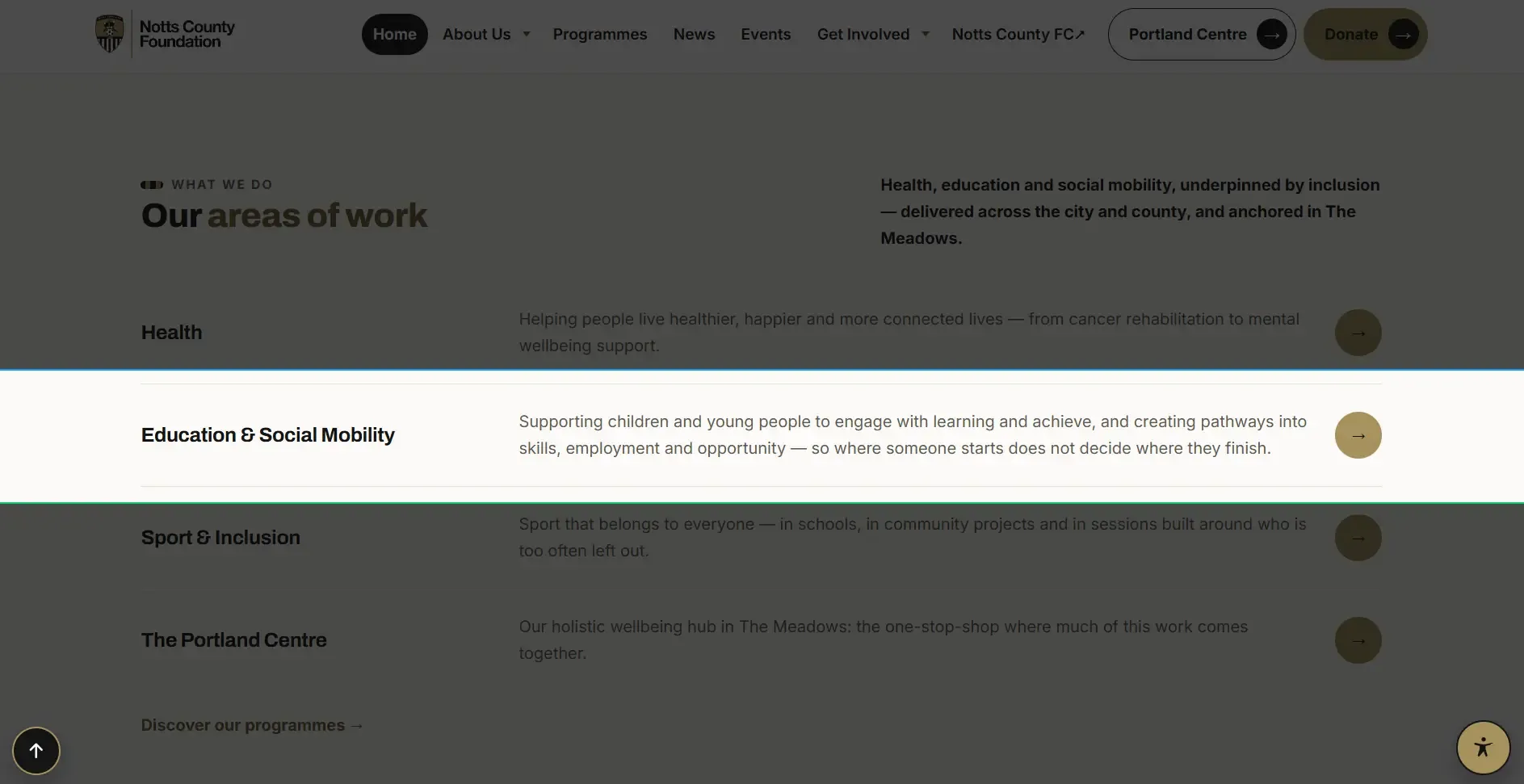
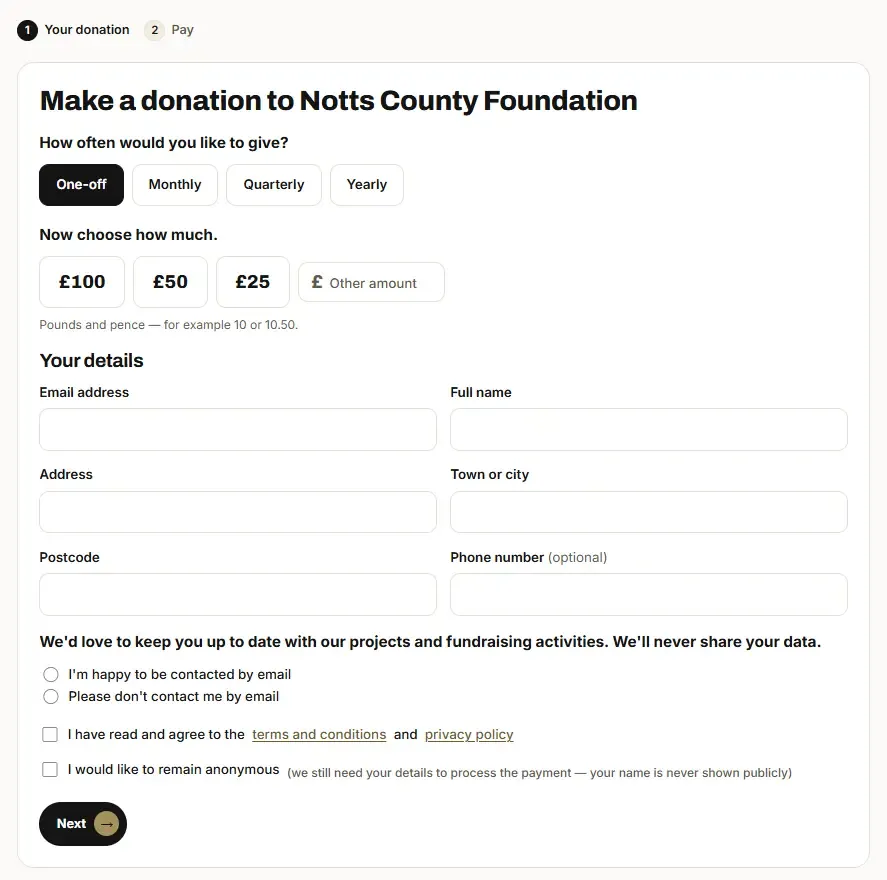
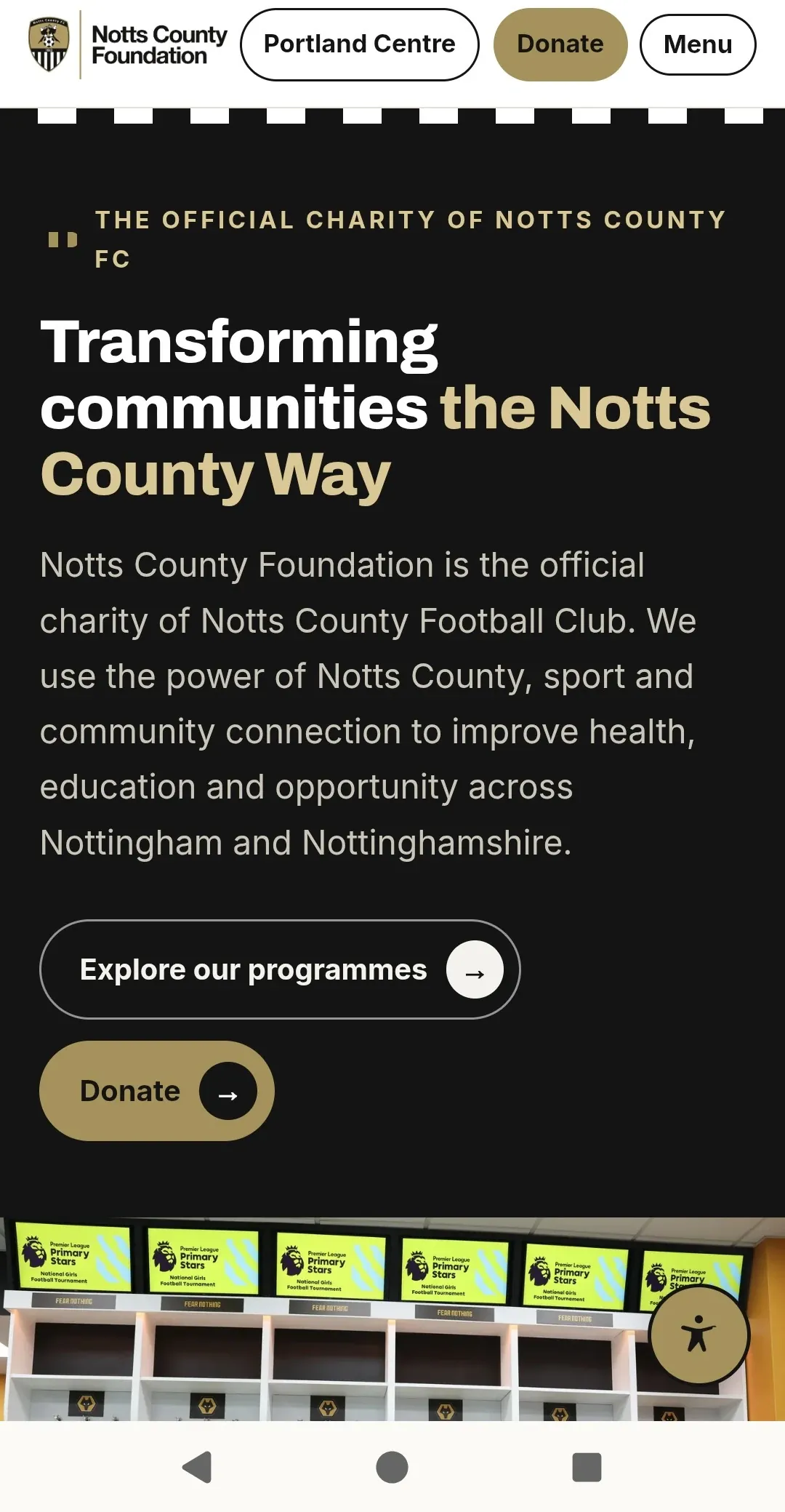
Notts County Foundation: the official charity of Notts County FC needed a WCAG 2.2 platform and chose us over several agencies because we could deliver a joined-up build. The bespoke CRM sits alongside bespoke donation software that replaced a subscription donation plugin, giving the team one place to manage supporters and giving. Vimana is now an official partner of the Foundation.
LoopCo: branded water cans carry QR codes tied to client campaigns. We built the custom CRM that creates each client's campaign, routes the QR code to the right destination, captures engagement data and reports back, either through Loop's reports or the client's own CRM login. A business model that didn't exist off the shelf.
Webro Cables & Connectors: not a CRM, but the add-on CRM clients ask about most. An AI workflow reads emailed purchase orders, matches part numbers and prepares a quotation for approval: up to 48 hours became around two minutes.
"We have had a brand new website built by Vimana recently for our small (ish) but growing waste management company… Amit is very knowledgeable, miles ahead of all the other marketing companies that we have worked with previously, and much more professional and down-to-earth. No sales jargon, or pushiness, and very reasonable pricing."
Charlotte Allen, Google review
How much does bespoke CRM development cost in the UK?
| Scope | Typical contents | Published UK ranges (2026) | Timeline |
|---|---|---|---|
| Starter | One pipeline, contacts, tasks, basic reporting, one team | £2,000–£5,000 (Jabu Designs); £8,000–£15,000 "most common" (Jabu) | 3–6 weeks |
| Team | Several pipelines, quotes, email integration, Xero, reporting | £15,000–£35,000 MVP (Softomate); £10,000–£40,000 (Magora) | 6–12 weeks |
| Multi-team | Portals, several integrations, mobile/offline, AI assistance | £35,000–£120,000 (Softomate, Magora) | 4–6 months, phased |
These are other agencies' published figures, not ours: To confirm: Vimana to confirm its own bands. We quote a fixed price per phase after discovery, with migration and each integration as separate lines. Ownership on final payment: source code, database, repositories and hosting accounts transfer to you, and independent source-code escrow is available for larger systems.
Bespoke CRMquestions,answered
Not covered here? Call and ask. We reply within 24 hours.
When does a bespoke CRM cost less than a subscription?
When seat numbers grow, usually from around ten users. Subscription CRMs charge per seat, so every hire raises the bill, and 2025 saw HubSpot rise around 5% at renewal and Salesforce around 6% (SaaStr, 2025). A bespoke CRM has a one-off build cost plus hosting, so the gap widens each year. See the five-year comparison on our software development page.
How much does bespoke CRM development cost in the UK?
UK agencies publish bands from about £2,000 for a single-pipeline tool, £8,000–£15,000 as the most common range, and £35,000–£120,000 for multi-team systems with portals and integrations (Jabu Designs, 2026; Softomate, 2026). We quote a fixed price after discovery and price migration and integrations as separate lines .
How long does it take to build a CRM?
A first release one team can use every day typically takes six to twelve weeks after discovery. Portals, further teams and integrations are then added in two-week sprints, each ending with a demo. Large multi-team systems with many integrations run four to six months, going live in stages rather than all at once.
Should I customise HubSpot instead of building?
If HubSpot, Zoho or Pipedrive covers 80% of your process and you have fewer than ten users, customise it and keep the marketing tools, templates and app marketplace you'd lose by leaving. Build when you need unusual workflows, client logins, deep integration with bespoke or legacy systems, or offline field use.
Can you migrate our data from spreadsheets or another CRM?
Yes. We map your fields, remove duplicates, import contacts, companies, deals, notes, tasks and attachments, then run old and new side by side for an agreed period before switch-off. Exports from HubSpot, Salesforce, Zoho, Pipedrive, Sage and Excel are routine. Migration is scoped and priced as its own line item.
Who owns the CRM and our data?
You do. Source code, database, repositories and hosting accounts transfer to your business on final payment, with documentation, and there are no per-user licences. For larger systems we can arrange independent source-code escrow so the code is released to you if we ever stopped trading.
Where is the data hosted, and is it UK GDPR compliant?
On AWS or Azure in UK regions , with encryption, role-based permissions, two-factor authentication and audit logs. We follow the ICO's data-protection-by-design guidance and complete a Data Protection Impact Assessment where processing is likely to be high risk, so the CRM supports your obligations as data controller.
Can the CRM connect to Xero, Outlook and our website forms?
Yes. Common integrations are Xero, Sage and QuickBooks for invoicing, Outlook or Gmail for email and calendars, website forms, WhatsApp, Mailchimp, Stripe and VoIP phone systems. Each is scoped individually. Note that Xero's API moved to tiered pricing in March 2026; a single-business connection fits the free tier (Apideck, 2026).
Can you add AI to a CRM?
Yes. For Webro we built an AI workflow that reads emailed purchase orders, matches customers' part numbers to Webro's own references and prepares a quotation for approval, cutting a task of up to 48 hours to around two minutes. Inside a CRM, AI can draft emails, summarise calls and score leads, with a human approving each action.
Show us how a deal moves through your business today
Bring the spreadsheet, the whiteboard photo and the renewal invoice. A discovery call ends with buy, extend or build, and if it's build you'll get a written specification with screens and a fixed price.
Related: software development · ERP development (need stock and production too?) · SaaS development · Laravel development · AI automation
---
Author: Amit Saini, founder and lead developer, Vimana Digital. Last reviewed: 9 October 2026
- 0115 647 0444
- contact@vimanadigital.com
- Monday to Friday, 8:30am to 6pm
- 1 Union Street, Long Eaton, Nottingham NG10 1HH
"They took the time to understand my ideas, share their own concepts and expertise, and guide me towards what would work best for me and my business." — Andy Parker, Google review