Ecommerce SEO Agency for Shops That Need Sales, Not Just Sessions
Category, product and brand-page strategy for WooCommerce, Shopify and bespoke stores, from a team that builds online shops as well as ranks them.
At a glance
- 5.0 from 50 Google reviews
- WooCommerce, Shopify and bespoke platforms
- Campaigns £1,000–£4,000 a month
- No long contracts
Ecommerce SEO optimises online shops for search: structuring categories and products so they rank for buying searches, feeding Google accurate product data, and controlling the duplicate URLs filters create. Vimana Digital runs ecommerce SEO for WooCommerce, Shopify and bespoke stores, priced within its national band of £1,000–£4,000 a month, with results over three to six months.
- Within its national band of
- £1,000–£4,000a month
- Results over
- 3–6months
Why a standard SEO package doesn't work on an online shop
A brochure site has 20 pages. A shop has 2,000, most of them generated by the platform, and the problems scale with the catalogue:
- Category pages are your money pagesNot the homepage or the blog. "Men's waterproof walking boots" is a category search, and most category pages are a product grid with no text at all.
- Filters multiply URLsSize, colour, price and brand filters can create thousands of near-identical pages that waste Google's crawl time and dilute rankings.
- Products come and goDiscontinued lines, out-of-stock items and seasonal ranges all need a rule, or you accumulate dead pages and broken redirects.
- Supplier descriptions are duplicated across every retailerselling the same product. Google has little reason to rank your copy of them.
- Google reads your product data directlyPrice, availability, reviews and shipping now appear in results from structured data, and mistakes there cost you the listing.
What our ecommerce SEO services include

- Category architecturemapping how people search to how your catalogue is organised, then building the categories and sub-categories that match, each with genuinely useful copy above or below the grid
- Product page optimisationunique descriptions for the lines that matter, specification tables, review collection, and image optimisation
- Product structured datacorrect Product, Offer and Review markup so Google can show price, stock and ratings in results, checked monthly in Search Console
- Faceted navigation controldeciding which filter combinations deserve a page (indexed, with content) and which don't (canonicalised or blocked), so crawl budget goes where it earns
- Out-of-stock and discontinued ruleswhat to keep, what to redirect, what to let expire, applied consistently
- Technical SEOCore Web Vitals, image delivery, script load, internal linking from category to product and back
- Brand and buying-guide contentthe pages that catch "best X for Y" and comparison searches, and the ones AI assistants quote
- Google Merchant Center and Shoppingfree product listings set up and kept clean; paid Shopping runs through Google Ads management
- Reportingorganic revenue and orders by landing page, not just traffic
Three ecommerce SEO facts most agencies won't tell you
- 1Product markup can produce two different result typesGoogle's documentation distinguishes "product snippets" (rating, price and availability on a normal result) from "merchant listing experiences" (richer shopping-style results for pages where the product can be bought). Both come from the same Product markup, and Search Console reports errors for each separately (Google Search Central, product structured data). Most stores we audit have markup broken in ways the platform never shows them.
- 2Google has written down how it wants filters handledIts faceted navigation guidance recommends a consistent parameter order, `rel="canonical"` from filter combinations to the main category, and robots.txt blocks on combinations that can never be useful, because unchecked facets are a leading cause of crawl waste (Google Search Central, 2024). The answer isn't "noindex everything": "size 12 walking boots" is a real search and deserves a page.
- 3Paginated category pages should not canonicalise to page oneGoogle stopped using `rel="prev"` and `rel="next"` as an indexing signal in 2019 and asks that each page in a series carries its own canonical, with products linked from the page they sit on. Pointing page 2 at page 1, which many themes do by default, hides every product past the first screen.
The context: around 30% of UK Google searches now show an AI Overview, and ChatGPT took 1.8 billion UK visits in the first eight months of 2025 (Ofcom, Online Nation 2025). Shopping research is moving into those answers, and the pages they quote are buying guides and comparisons with clear, sourced claims. That's why AI search optimisation is part of every ecommerce campaign we run.
WooCommerce, Shopify or bespoke: which is better for SEO?
All three can rank. The difference is how much control you have and how much maintenance you carry.
| WooCommerce | Shopify | Bespoke (PHP / Laravel / Next.js) | |
|---|---|---|---|
| URL structure | Fully editable | Fixed: /collections/, /products/, /pages/; products also appear under collection URLs with a canonical back to the main product | Whatever you need |
| Faceted navigation | Depends on the plugin; often needs configuring | Filter URLs are canonicalised by default; limited indexable facets without apps | Designed in from the start |
| Page speed | Depends on hosting and plugin count | Fast hosting included; apps can slow it | As fast as you build it |
| Structured data | Plugins add it; usually needs correcting | Themes add it; often incomplete | Built exactly to Google's spec |
| Catalogue size | Comfortable to a few thousand products with good hosting | Comfortable at scale | Built for the scale you have (we've built stores of 6,000+ products) |
| Best for | Content-led shops that want flexibility | Shops that want simplicity and don't need unusual URLs | Large or specialist catalogues, trade pricing, integrations |
If you're choosing a platform or replatforming, read ecommerce web design first; moving a shop without losing rankings is covered by website migration SEO.
How much does ecommerce SEO cost?
Ecommerce campaigns sit within our national SEO band of £1,000–£4,000 a month, since most shops sell UK-wide. What moves the price is catalogue size, how many categories need content, how much product copy has to be written, and whether Merchant Center and Shopping are in scope. A single-category shop with a few hundred products can start near the bottom of the band; a multi-brand store with thousands of lines and active faceted navigation will sit higher. To confirm: Vimana to confirm an ecommerce-specific from-price Prices exclude VAT.
Timeline: technical and structured-data fixes show in Search Console within weeks; category rankings and organic revenue typically build over three to six months. Rolling monthly with one month's notice, and a 90-day review.
"Amazing service, produced an amazing ecommerce website for us! exactly what we were looking for, always available to contact, very happy! Thanks Amit!"
Hannah Hawkins
Want to know what your store is leaving on the table? Request a free audit or call 0115 647 0444.
How an ecommerce SEO campaign runs
- 1Crawl and auditWe crawl the whole store, including facet URLs, and report indexing waste, structured-data errors, thin categories and speed problems.
- 2Map search to catalogueKeyword research by category and product type, matched to buying intent, with a list of categories to create, merge or rewrite.
- 3Fix the platformCanonicals, facets, pagination, markup, speed and internal linking, in the first six to eight weeks.
- 4Write and publishCategory copy, priority product descriptions, buying guides and brand pages, monthly.
- 5Feed Google ShoppingMerchant Center set up or cleaned, free listings live, disapprovals resolved.
- 6Report on revenueOrders and revenue from organic by landing page, plus Search Console and rankings, every month; strategy reviewed every 90 days.
Ecommerce stores we've built and optimised
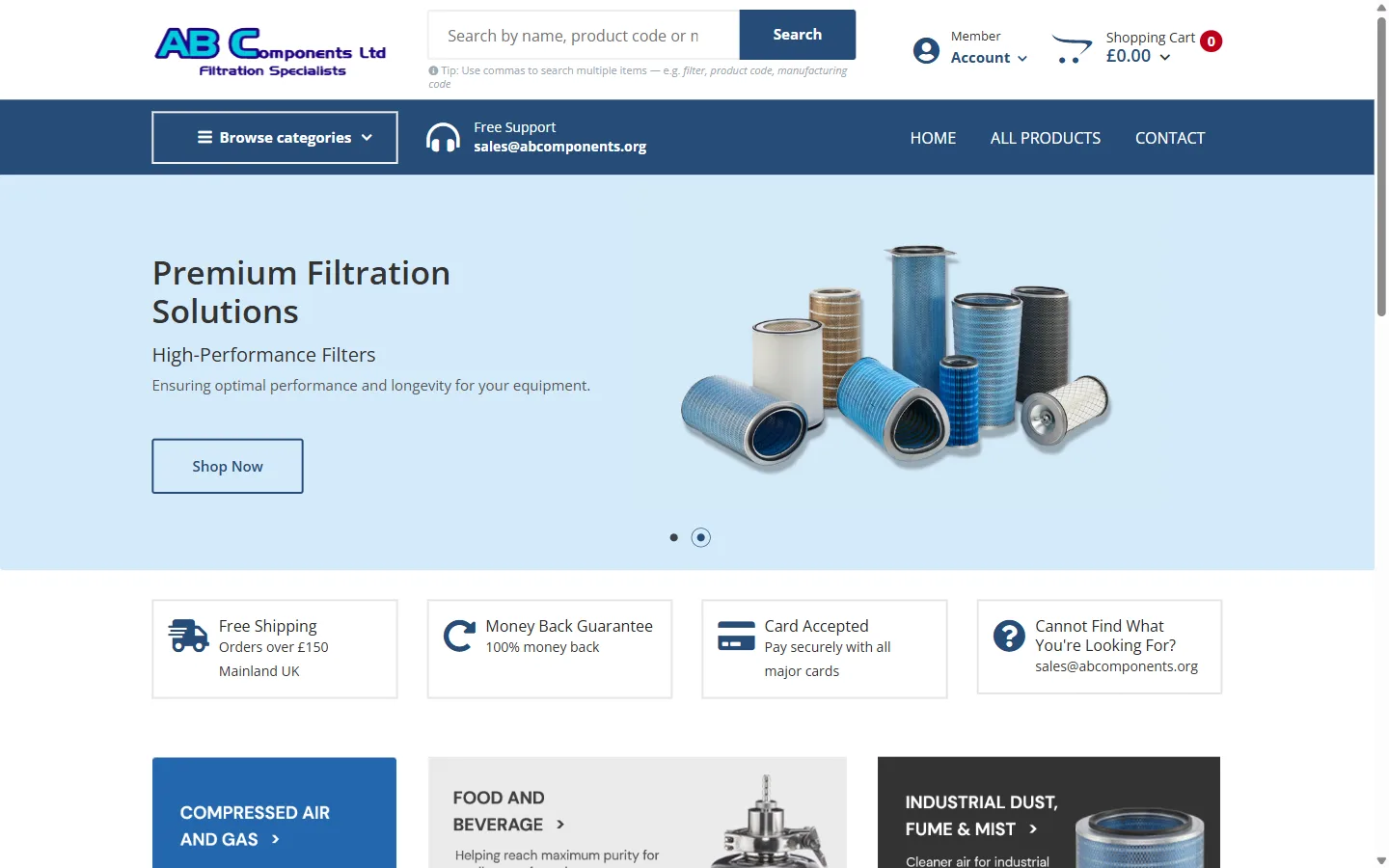 AB Components, Donaldson Filters storeA dedicated bespoke ecommerce platform for one stocked brand, with 6,000+ products searchable by keyword, product code and manufacturing code.Result: a specialist catalogue customers can actually buy from.
 Ultrabond AdhesivesEcommerce replacing an outdated site, with product variations, customer accounts and repeat ordering for trade buyers; we populated the catalogue too.
 Emma Harris LingerieLuxury fashion store replatformed from a site where every product change needed the previous developer; the client now manages collections, sizes and colours herself.
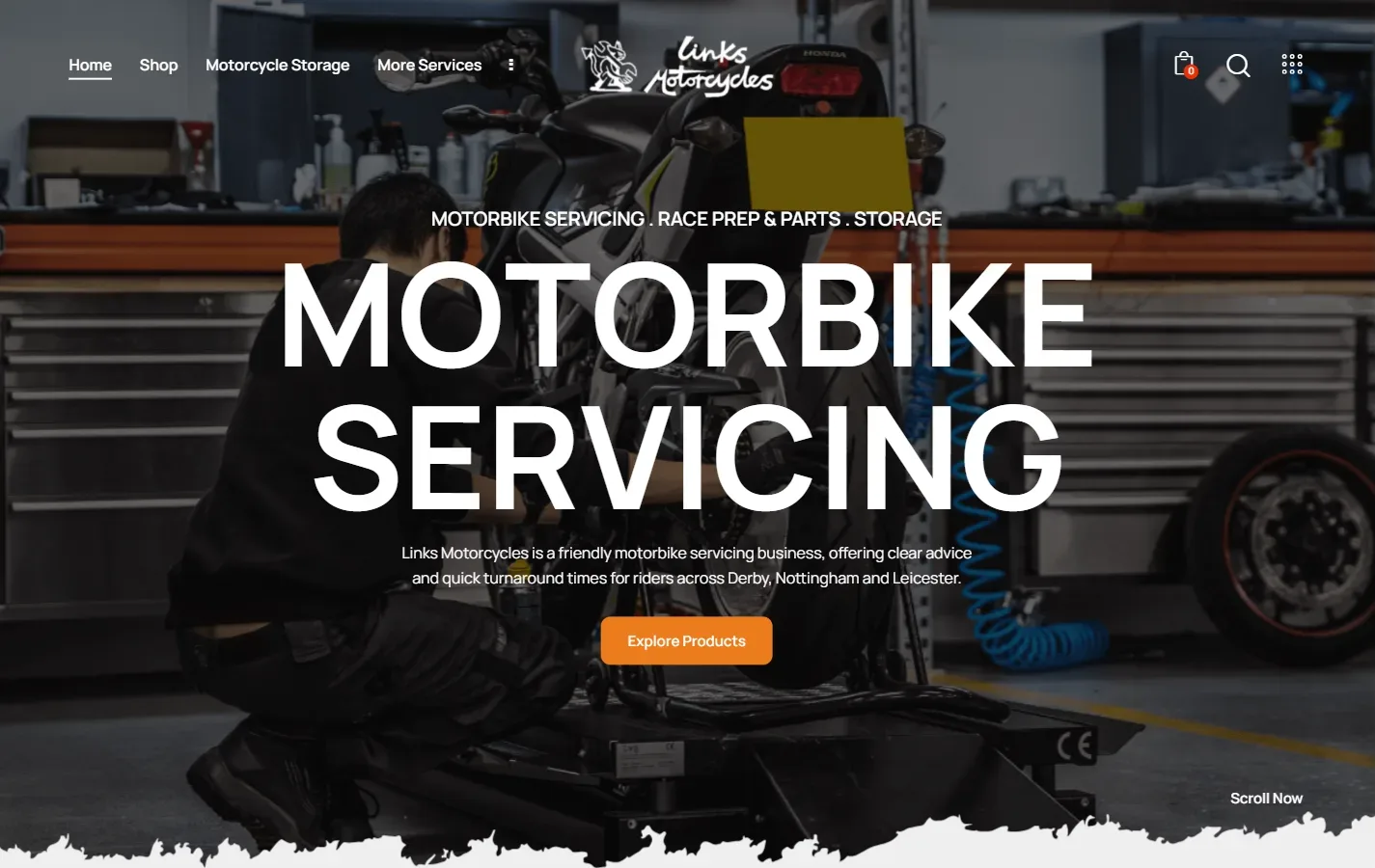 Links MotorcyclesA basic site turned into a working retail platform for constantly changing bikes and parts.
We'll be straight with you: those are build results. We don't yet publish an organic revenue figure for an ecommerce client, and we'd rather say so than quote someone else's. To confirm: ecommerce SEO result figure, e.g. organic revenue or category rankings for one store
"We have had a completely new site created with a working retail area and contact forms. Really pleased with the outcome, although it is a constant work in progress due to ever changing stock and bikes the quality is spot on."
Link Motorcycles
Related services
Ecommerce SEO is part of our wider SEO services and digital marketing. Shops with a physical store also need local SEO. Paid Shopping campaigns run through Google Ads management.
Ecommerce SEOquestions,answered
Not covered here? Call and ask. We reply within 24 hours.
How much does ecommerce SEO cost in the UK?
Most UK agencies charge £1,000–£5,000 a month for SME campaigns (Whito and Wiseguy XL, 2026). Vimana Digital prices ecommerce SEO within its national band of £1,000–£4,000 a month, depending on catalogue size, category count and content volume. You see what each month's fee buys before you commit, and there's no long contract.
How long does ecommerce SEO take to work?
Technical fixes such as structured data and canonical corrections show in Search Console within weeks. Category rankings and organic orders typically build over three to six months, longer in crowded retail sectors. A new store starts slower than one with history. We report organic revenue monthly so you can judge progress early.
Is Shopify or WooCommerce better for SEO?
Both rank well when set up properly. Shopify is simpler and fast by default but fixes your URL structure and limits indexable filter pages. WooCommerce gives full control over URLs and facets but depends on good hosting and disciplined plugin use. For very large or specialist catalogues, a bespoke build removes both sets of limits.
Do I need unique product descriptions for every product?
No, prioritise. Rewrite descriptions for the products that earn most or have the most search demand, and let long-tail lines carry supplier copy with unique specifications and reviews. Category pages matter more than most product pages, so we usually write category copy first and work down the catalogue by value.
What is faceted navigation and why does it matter for SEO?
Faceted navigation is the filter system (size, colour, brand, price) that generates a new URL for each combination. Left unmanaged, thousands of near-duplicate pages waste Google's crawl time and split rankings. Google's guidance recommends consistent URL parameters, canonicals to the main category and blocking useless combinations, while keeping genuinely searched facets indexable.
Should I delete out-of-stock or discontinued products?
It depends. Temporarily out-of-stock products should stay live with clear availability markup. Discontinued products with rankings or links should redirect to the closest replacement or their category. Products with no traffic and no links can be removed and allowed to return a 410. We set the rule once and apply it consistently.
Can ecommerce SEO work alongside Google Shopping ads?
Yes, and it should. Free product listings in Google's Shopping tab come from Merchant Center and cost nothing; paid Shopping ads use the same feed. A clean feed, accurate structured data and good category pages improve both. We use Shopping search-term data to decide which categories deserve SEO investment first.
Will AI Overviews and ChatGPT affect my online shop?
Yes. Around 30% of UK searches show an AI Overview (Ofcom, 2025), and product research is moving into AI answers that quote buying guides and comparison pages. Stores with clear, sourced guide content get named; stores with only product grids don't. We build that content into every ecommerce campaign and track AI Overview clicks in Search Console.
Can you migrate my shop to a new platform without losing rankings?
Yes, with planning. Every category, product and filter URL is mapped to its new equivalent and redirected one-to-one, product data and content are carried across, and Search Console is monitored daily after launch. Unplanned replatforms are the most common way shops lose half their organic revenue. See website migration SEO.
Find out what your store is leaving on the table
Send your shop's address and we'll crawl it and reply with the three issues costing you the most organic orders, plus an honest view on what a campaign would need to cost.
- 0115 647 0444
- contact@vimanadigital.com
- Monday to Friday, 8:30am to 6pm
- 1 Union Street, Long Eaton, Nottingham NG10 1HH
"Amit was very open and honest about what the issues were with our current site, he was very knowledgeable and gave us what we asked for." — Link Motorcycles