Ecommerce SEO for Nottingham Retailers: What Actually Moves Online Sales in 2026
By Amit Saini, founder of Vimana Digital · Updated 23 October 2026
The short answer
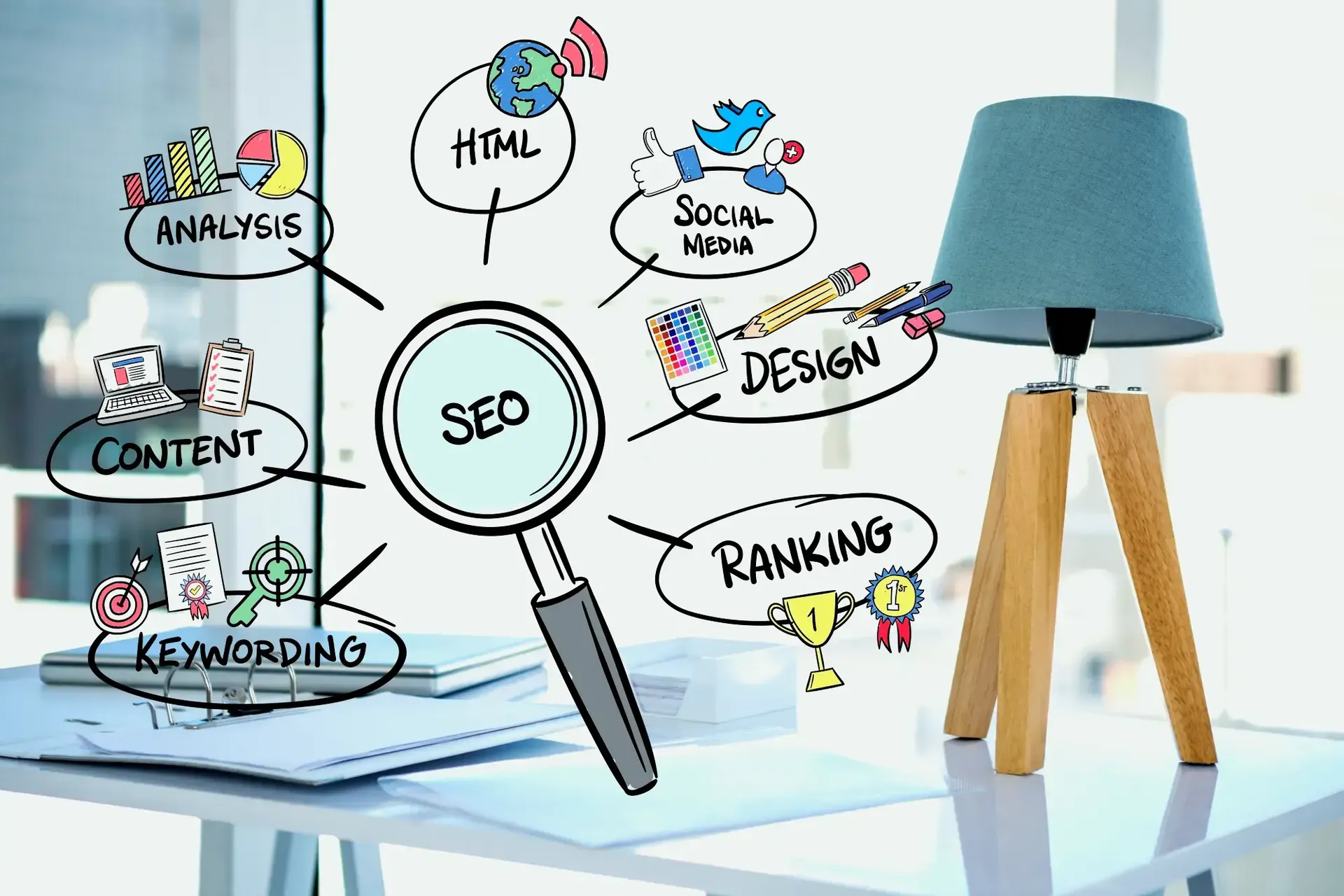
Ecommerce SEO for a Nottingham retailer means structuring categories around how people search, writing real copy on category pages, fixing product structured data so Google shows price and stock, controlling filter URLs, and switching on free Google Shopping listings. Campaigns sit in Vimana Digital's national band of £1,000–£4,000 a month and typically build over three to six months.
For the Nottingham service with local case studies and prices, see SEO agency Nottingham. The national service, including the platform comparison, is on ecommerce SEO. This article is the long version of where the sales go missing.
Why does ecommerce SEO look different for a Nottingham shop?
Two reasons, one local and one technical.
The local one: "ecommerce SEO agency Nottingham" is one of the searches that brings the most people to this site, 3,457 impressions in the 16 months to October 2026 by our Search Console. People here are looking for it specifically, and the city's retail base explains why. The ONS counts 1,650 wholesale and retail enterprises in Nottingham in 2026, the largest sector by some distance, and 8,560 of the city's 9,940 businesses employ fewer than ten people (ONS via Nomis, March 2026). That is a lot of small shops, from Hockley independents to West Bridgford boutiques to trade suppliers in Colwick, whose online store was set up by whoever built the website and never looked at again.
The technical one: a brochure site has 20 pages and a shop has 2,000. Most of those were generated by the platform, not written by anyone, and SEO problems scale with the catalogue. A standard "local SEO package" built for a dentist does nothing for a shop with 400 products and six filters.
Where do Nottingham shops lose organic sales?
The same places, store after store, when we crawl them:
- Empty category pages. "Women's waterproof jackets" is a category search. The category page is a grid with no words, so Google has nothing to rank it for and ranks the supplier's page instead.
- Filter URLs multiplying. Size, colour, brand and price filters generate a new URL for every combination. Unmanaged, that is thousands of near-identical pages soaking up crawl time and splitting rankings between them.
- Supplier descriptions. The same product text appears on every retailer selling that line. Google has no reason to prefer your copy of it.
- Broken product markup. Price, availability and review stars appear in results from structured data on the page. Platforms and themes add it, and it is wrong more often than it is right.
- Pagination that hides the catalogue. Page 2, 3 and 4 of a category canonicalised to page 1 hides every product past the first screen from Google.
- Out-of-stock chaos. Discontinued lines left live, or deleted with no redirect, so links and rankings leak away.
- Heavy pages. Shops carry more scripts, images and third-party apps than any other site type, and Core Web Vitals suffer for it.
None of these shows up in a platform dashboard. They show up in Search Console and in a crawl, which is where every campaign of ours starts.
What should a Nottingham retailer fix first?
In the order we run it:
- 1Crawl the whole store, including filter URLs. Count what Google can see versus what you meant it to see. The gap is usually startling.
- 2Map search to catalogue. Keyword research by category and product type, then a list of categories to create, merge or rewrite so the structure matches how Nottingham customers (and national ones) actually search.
- 3Write category copy before product copy. Categories catch more searches than almost any single product. A few honest paragraphs above or below the grid, written for the buyer, not the algorithm.
- 4Fix product structured data. Product, Offer and Review markup checked against Google's documentation and monitored in Search Console every month.
- 5Decide the filter rules. Which combinations deserve a page (indexed, with copy) and which get canonicalised or blocked.
- 6Correct pagination. Each page in a series carries its own canonical and links to the products that sit on it.
- 7Set an out-of-stock rule and apply it everywhere. Keep, redirect, or let expire, decided once.
- 8Switch on Google's free product listings. Merchant Center set up, feed cleaned, disapprovals cleared. Paid Shopping runs through Google Ads management off the same feed.
- 9Write the buying guides. The "best X for Y" and comparison pages that catch research searches and get quoted by AI assistants.
- 10Report on revenue, not sessions. Organic orders and revenue by landing page, monthly.
Three technical facts most Nottingham stores haven't been told
- 1One set of Product markup, two kinds of result. Google separates "product snippets", which add rating, price and stock to a normal listing, from "merchant listing experiences", the shopping-style results shown when the product can be bought on the page. The same Product markup drives both, Search Console reports errors for each separately (Google Search Central, product structured data documentation).
- 2Google has written down how it wants filters handled. Its faceted navigation guidance recommends keeping parameter order consistent, using `rel="canonical"` to point filter combinations at the main category, and blocking in robots.txt the combinations that can never be useful (Google Search Central, faceted navigation best practices, 2024). The answer is not "noindex everything": "size 12 walking boots" is a real search and deserves an indexable page.
- 3Page 2 of a category is its own page. Google dropped `rel="prev"` and `rel="next"` as an indexing signal in 2019, and wants every page in a paginated series to point its canonical at itself, not back to page one. Many themes do the opposite by default.
Does a Nottingham shop with a physical store still need local SEO?
Yes, and the two jobs feed each other. If you have a shop on Bridlesmith Gate or a unit on Castle Marina, your Google Business Profile can list products, show opening hours and appear in the map pack for "near me" searches, which is a separate ranking system from your product pages. Eight of the top ten map-pack factors are profile fields, and "open at time of search" is new in the top five (Whitespark, 2026). Accurate hours matter twice for a retailer: the ranking and the wasted trip.
The field-by-field version is in Google Business Profile for Nottingham businesses, and the service is local SEO. The short rule: product pages win the national searches, the profile wins the person three streets away.
What about AI Overviews and shopping research?
Ofcom's Online Nation 2025 report found AI Overviews on roughly 30% of UK Google searches, and 1.8 billion UK visits to ChatGPT between January and August 2025. Shoppers now research products inside those answers.
What that changes for a retailer is which pages matter. Semrush's study of 200,000 keywords found only 20–26% of the links cited in AI Overviews overlapped with the top-ten organic results, and each Overview cited around 11 sources (Semrush, July 2025). Being cited is a separate target from ranking first, and the pages that get cited are the ones with clear, sourced claims: buying guides, comparisons, "which size do I need" explainers. A product grid is never quoted. Google's own guidance is that no special markup or file is needed; the same content and structure signals apply (Google Search Central, AI features documentation, December 2025). We fold this into every ecommerce campaign and track AI Overview clicks in Search Console, which reports them under the ordinary "Web" type. More on AI search optimisation.
Which platform should a Nottingham retailer be on?
All three main options rank. The difference is control and upkeep:
- WooCommerce: fully editable URLs and filters, but it depends on good hosting and disciplined plugin use.
- Shopify: fast by default and simple to run, but URL structure is fixed and indexable filter pages are limited without apps.
- Bespoke (PHP, Laravel, Next.js): built exactly to Google's spec and to your catalogue, which is what we did for AB Components' 6,000-product Donaldson Filters store.
If you're choosing or replatforming, read ecommerce web design first. Moving a shop without losing rankings is a job in itself, covered under website migration SEO; unplanned replatforms are the most common way we see shops lose half their organic revenue.
Stores we've built and optimised
Facts only, and we'll be honest about the gap:
- AB Components, Donaldson Filters store: a bespoke single-brand store with 6,000+ products searchable by keyword, product code and manufacturing code.
- Ultrabond Adhesives: trade ecommerce with product variations, customer accounts and repeat ordering; we populated the catalogue too (on-page SEO set up during the build).
- Emma Harris Lingerie: a luxury fashion store the client now runs herself, after a site where every product change needed the previous developer.
Those are results from the builds themselves. We have no published organic revenue figure for a Nottingham store yet, and we won't borrow another agency's numbers to fill the gap.
"Amazing service, produced an amazing ecommerce website for us! exactly what we were looking for, always available to contact, very happy! Thanks Amit!" (Hannah Hawkins)
"Amit was very open and honest about what the issues were with our current site, he was very knowledgeable and gave us what we asked for. We have had a completely new site created with a working retail area and contact forms." (Link Motorcycles)
Frequently asked questions
What should a Nottingham shop budget for search?
Vimana Digital prices ecommerce SEO within its national band of £1,000–£4,000 a month, because most shops sell UK-wide. Catalogue size, category count and how much copy needs writing decide where in the band you sit. Our ecommerce SEO agency in Nottingham page covers how we run it. UK agencies typically charge £1,000–£5,000 a month for SME campaigns (Whito and Wiseguy XL, 2026). Our prices exclude VAT.
How long before ecommerce SEO shows results?
Search Console picks up technical work, such as fixed canonicals and valid product markup, within a few weeks. Category rankings and organic orders take longer, usually three to six months, and more in competitive sectors like fashion. A brand-new shop moves slower than an established one. Monthly organic revenue reporting lets you judge progress early.
Do I need to rewrite every product description?
No. Rewrite the products that earn most or have the most search demand, and let long-tail lines carry supplier copy plus unique specifications and reviews. Category pages catch more searches than most individual products, so we write category copy first and work down the catalogue by value.
Is Shopify or WooCommerce better for SEO in 2026?
Either can rank if it's configured well. Shopify is quicker to run and fast out of the box, but locks the URL structure and restricts which filter pages can be indexed. WooCommerce lets you control everything, which means hosting and plugin choices matter. A very large or specialist catalogue may justify a bespoke build that avoids both sets of limits. Pick on how you'll run the shop, not on SEO alone.
Will AI Overviews take sales away from my online shop?
Some research clicks, yes; around 30% of UK searches show one (Ofcom, 2025). But Overviews cite around 11 sources each, and only a fifth to a quarter overlap with the top ten organic results, so clear buying guides get named even when they don't rank first. Stores with only product grids don't get cited at all.
Get a Nottingham ecommerce SEO audit
Send us your shop's address. We'll crawl it, then tell you which three issues are losing you the most organic orders and roughly what fixing them properly would cost. No long contract: it's rolling monthly with one month's notice. Call 0115 647 0444, email contact@vimanadigital.com, or request a free audit. We're in Long Eaton, about 20 minutes' drive from the city centre, and for larger projects we'll come to the shop.
5.0 from 50+ Google reviews — "We've already seen the benefits of the SEO work, with improved Google visibility and a much stronger online presence." (Frankie)