Off-Page SEO Explained: What Happens Away From Your Website
Written by Amit Saini, Vimana Digital. Updated November 2026.
The short answer
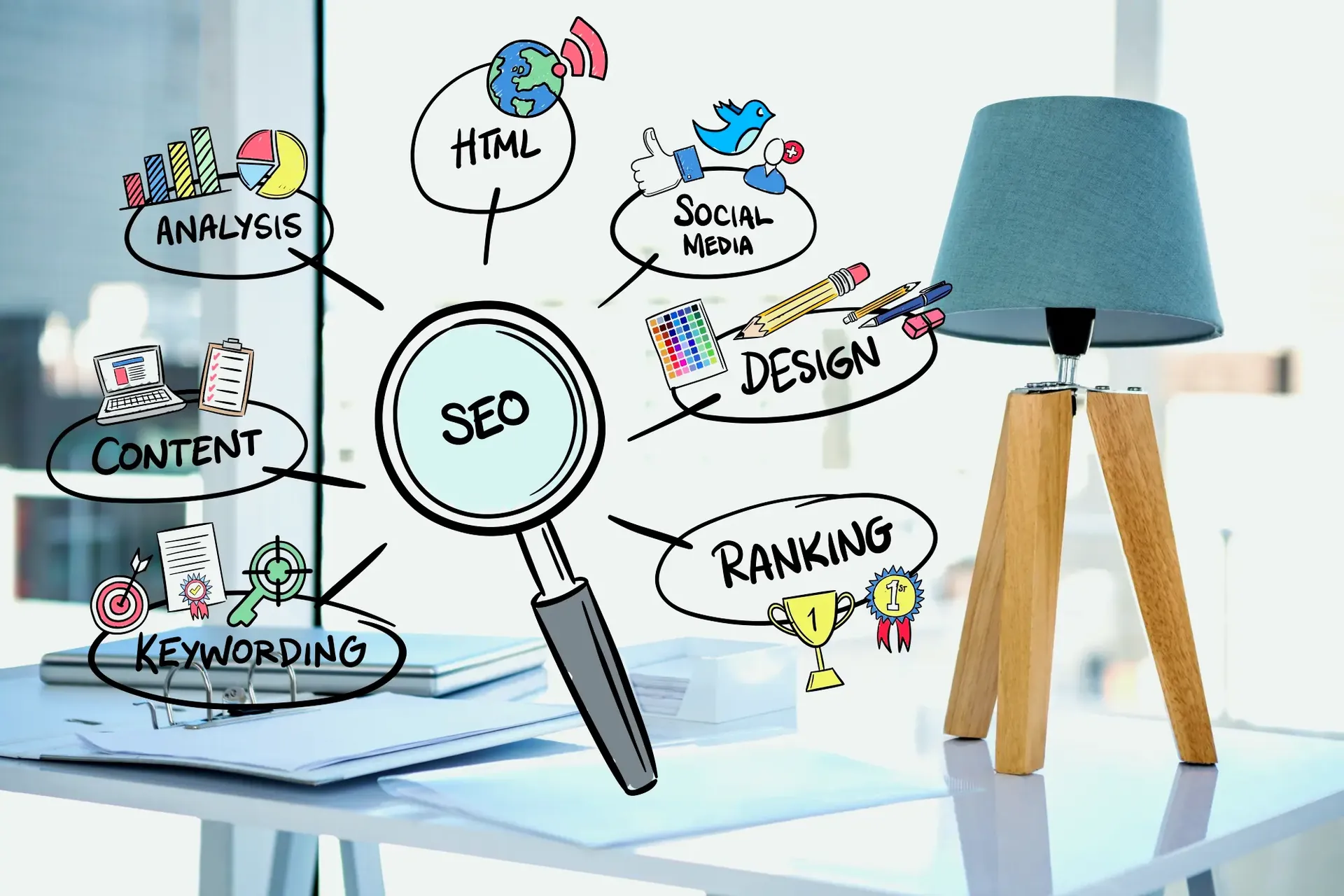
Off-page SEO is everything other websites and people say about your business that affects how you show up in search. It covers backlinks (links from other sites), brand mentions, directory listings and reviews. You can't control it directly, but you can earn it, and you can avoid the tactics that get sites ignored or penalised.
What most off-page SEO guides leave out
Before writing this, we read the ten guides that rank highest for "off page seo". Google blocked our automated check on 10 November 2026, so we used Bing's UK results from the same day: Semrush (two guides), Analytify, SEO.com (two), Backlinko, Yoast, Moz, GeeksforGeeks and echoVME. We searched each page's text for a handful of topics.
| What we looked for | Guides that mention it |
|---|---|
| Guest posting as a tactic | 8 of 10 |
| "Social signals" | 4 of 10 |
| Google's spam policies | 0 of 10 |
| UK fake review law (the CMA or the 2024 Act) | 0 of 10 |
| The rel="sponsored" link label for paid links | 0 of 10 |
So the guides recommend guest posting, but none of them mention the Google policy that names guest posts with keyword links as link spam. And none of them mention that fake and hidden-incentive reviews are now banned in the UK. Both are below, quoted from the source.
How we did it: a plain text search of each page's HTML on 10 November 2026. A guide could cover a topic in different words, so treat these as close counts, not exact ones.
On-page, technical and off-page SEO: how they fit
SEO is usually split into three parts, and they depend on each other.
| On-page SEO | Technical SEO | Off-page SEO | |
|---|---|---|---|
| What it is | The content and wording of your pages | How well search engines can crawl, load and understand your site | What others say about you, away from your site |
| Examples | Titles, headings, service pages, internal links | Speed, mobile, indexing, redirects, structured data | Backlinks, mentions, reviews, listings, press coverage |
| Who controls it | You | You or your developer | Mostly others; you influence it |
| The question it answers | Is this page relevant? | Can Google read this page? | Should anyone trust this business? |
A strong site with no off-page signals struggles in competitive searches. Strong off-page signals pointing at a weak site waste much of their value. Most small businesses should fix the on-page and technical basics first, then build off-page steadily.
Backlinks: what they are and why Google uses them
A backlink is a link from another website to yours. Google has used links to understand the web since it started. Its own guide to its ranking systems describes PageRank, its original link analysis system, and says it "continues to be part of our core ranking systems" (Google Search Central, ranking systems guide, updated 10 December 2025).
Links do two jobs. They help Google find your pages, and they act as a sign that other people think your content is worth pointing to. Not every link counts the same. A link from a relevant site with real readers, placed because someone chose to, is worth far more than dozens from sites that exist to sell links.
For the methods we use, see our off page SEO service, which is part of every SEO plan rather than sold on its own.
Brand mentions and listings
Not every reference to your business includes a link.
- Unlinked mentions are pages that name your business without linking to it. They still tell readers you exist and what you do. Where it's reasonable, ask the writer to add a link. It's often the easiest link you'll get.
- Listings (often called citations) are your business name, address and phone number on directories and maps. For local businesses, consistency matters: the same name, address and phone number everywhere. Our local SEO work covers the directories worth being on.
Reviews and reputation
Reviews are off-page SEO at its most visible. Google says local ranking depends on relevance, distance and prominence, and that prominence is "based on info like how many websites link to your business and how many reviews you have" (Google Business Profile Help, how Google determines local ranking).
So reviews and links both feed the map results directly. And people read the stars before they click.
What we saw in Leicester
On 10 November 2026 we searched three Leicester service terms on google.co.uk and looked at the three businesses in each map pack.
| Search | Reviews held by the three map-pack businesses | Directory and review sites in the first 10 web results |
|---|---|---|
| plumber leicester | 993, 377 and 198 | 5 of 10 |
| accountant leicester | 204, 142 and 31 | 2 of 10 |
| seo agency leicester | 126, 27 and 7 | 2 of 10 |
The point isn't the exact numbers. It's that the bar changes completely by trade. A plumber needs hundreds of reviews to compete for the map, and half the ordinary results are directories like Checkatrade, so those listings are part of off-page SEO too. An accountant can get into the map with a few dozen. Check your own main search before deciding where to spend effort.
The rules on reviews
- Google's policy says businesses must not "offer incentives – such as payment, discounts, free goods and/or services" in exchange for a review, and must not "selectively solicit positive reviews from customers" (Google Maps user-contributed content policy).
- UK law now bans fake reviews and concealed incentivised reviews under the Digital Markets, Competition and Consumers Act 2024. The Competition and Markets Authority's guidance (CMA208, published 4 April 2025) says businesses that publish reviews must take "reasonable and proportionate steps" to prevent and remove fake reviews and concealed incentivised reviews.
The safe approach: ask every customer at a sensible moment, offer nothing in return, and reply to every review yourself.
Social media and off-page SEO
Social media helps off-page SEO indirectly. A post can put your guide in front of a journalist, a supplier or a blogger who then links to it or mentions you. An active, consistent profile also helps people check you're a real business.
What it doesn't do: four of the ten top guides list "social signals", but we haven't found Google documentation saying likes, shares or follower counts are a ranking factor, so we don't sell them as one. Treat social media as a way to get your best content seen. Our social media marketing service is built around that.
Off-page signals and AI search
Google says you can "apply the same foundational SEO best practices for AI features as you do for Google Search overall", and that there's no special structured data to add (Google Search Central, AI features and your website). So the off-page signals above matter there too.
Other AI assistants, such as ChatGPT, build answers from sources across the web. Being named accurately and consistently in reviews, directories and articles in your field gives them more to work with. Nobody can promise an AI tool will recommend you, but a business that's barely mentioned anywhere gives it nothing to go on. Our AI search optimisation work treats mentions as a target in their own right.
Risky off-page tactics: what Google's spam policies say
Google's spam policies (updated 28 August 2026) list examples of link spam. Among them:
- "Buying or selling links for ranking purposes", including "exchanging money for links, or posts that contain links" and "exchanging goods or services for links"
- "Excessive link exchanges ('Link to me and I'll link to you')"
- "Using automated programs or services to create links to your site"
- "links with optimized anchor text in articles, guest posts, or press releases distributed on other sites"
- "Low-quality directory or bookmark site links"
- "Widely distributed links in the footers or templates of various sites"
Paid links are allowed if they carry a rel="nofollow" or rel="sponsored" label, which tells Google not to pass ranking credit. The risk is paying for a link and passing it off as editorial. Google says "sites that violate our policies may rank lower in results or not appear in results at all".
Note what that means for guest posting, which 8 of the 10 top guides recommend. A guest post written to inform readers, with a natural mention of you, is fine. A guest post written to carry a keyword link back to you is exactly what the policy describes.
Off-page SEO checklist for a small business
| Task | How often | Effort |
|---|---|---|
| Check your Google Business Profile is complete and accurate | Monthly | Low |
| Ask every customer for a review; reply to every review | Ongoing | Low |
| Make sure name, address and phone match on the main directories | Twice a year | Low |
| Get listed on supplier, manufacturer and trade body sites | Once, then check yearly | Low |
| Search for unlinked mentions of your name and ask for links | Quarterly | Low |
| Look at Search Console's Links report for sites you don't recognise | Monthly | Low |
| Answer journalist requests in your field | Monthly | Medium |
| Publish one guide or piece of original data other sites would want to link to | Quarterly | High |
A short glossary of off-page SEO terms
- Anchor text: the clickable words in a link. Natural anchor text varies; every link using the same keyword looks manufactured.
- Backlink: a link from another website to yours.
- Citation: your business name, address and phone number on another site, with or without a link.
- Digital PR: earning coverage and links by giving journalists stories, data or expert comment.
- Disavow: a file you can send Google listing links you want it to ignore. Only needed in unusual cases, such as a history of bought links.
- Link scheme: any arrangement to create links mainly to manipulate rankings. Google treats it as spam.
- NAP: name, address and phone number.
- Nofollow and sponsored: link labels that tell Google not to pass ranking credit. Required on paid links.
- Referring domain: a separate website linking to you. Ten links from one site count as one referring domain.
- Unlinked mention: a reference to your business with no link.
Off-page SEO questions, answered
What are the most effective off-page SEO techniques?
For most small businesses: accurate local listings, a steady flow of genuine reviews, links from suppliers and trade bodies, and asking for links where you're already mentioned. Digital PR and linkable guides come next, once the basics are done.
Is off-page SEO more important than on-page?
No. They work together. Links pointing at thin or slow pages are largely wasted, so fix on-page and technical issues first.
Can I do off-page SEO myself?
Yes, especially the basics in the checklist above. Where businesses usually need help is outreach and digital PR. Our off page SEO service covers both as part of an SEO plan.
Is guest posting still safe?
Writing for a relevant site to help its readers is fine. Writing to place keyword links back to yourself is named in Google's spam policies. If an agency sells guest posts by the number, ask which one you're buying.
Do directory links still help?
A handful of accurate listings on relevant directories help local businesses, and for some trades they fill half of page one. Mass submissions to low-quality directories don't, and Google names them in its spam policies.
Can I pay for reviews or offer a discount for one?
No. Google's policy forbids incentives for reviews, and in the UK, concealed incentivised reviews are banned under the Digital Markets, Competition and Consumers Act 2024.
How long does off-page SEO take to work?
Months rather than weeks. New links and reviews build up gradually, and Google takes time to find and weigh them.
Our free website SEO audit includes a look at your reviews, listings and links, and tells you plainly which off-page gaps are worth fixing first. A full paid SEO audit costs about £300 for a small site. Ongoing off-page work is part of every plan in our SEO services: local from £400 a month, national £1,000–£4,000, no long contracts.
Get a quote