Ecommerce web design in Nottingham: what to budget in 2026
By Amit Saini, founder of Vimana Digital · Updated 11 November 2026
If you run an independent shop in Hockley, a trade counter in Colwick or a product business from a unit in Beeston, the questions usually arrive in the same order. Can we sell online? What will it cost? How long before it's live? This post answers the second and third with the prices we publish and the shops we have actually built, rather than a range borrowed from a national survey.
It sits alongside our main page on ecommerce web design in Nottingham, which covers who we are and our local work. Here we go further into the shop itself: which platform suits which kind of Nottingham business, what pushes the price up, and what to sort out before you ask anyone for a quote.
The short answer
A standard WooCommerce shop with us starts from around £3,000. A shop that needs customer accounts, product variations, booking or more than one language sits in the £3,000 to £6,000 band. Bespoke or large-catalogue platforms start from £5,000. Once your products, photos and copy are ready, a standard shop is usually built in about a week; getting that content ready is what takes the time. After launch, hosting is from £120 a year with SSL included, and website management is optional, from £500 a year or £50 a month. All prices exclude VAT.
For context, Adtrak, a Nottingham agency, publishes ecommerce prices from about £9,750 to over £17,000 (checked November 2026). The full side-by-side comparison, including brochure sites, is in our Nottingham website cost guide.
Which platform suits which Nottingham business?
Most platform comparisons treat every shop as the same. In practice the right choice depends on how your customers buy, so here is how we would think about four types of business we meet around the city.
An independent retailer with a physical shop. A gift shop in Hockley or a boutique in West Bridgford usually needs a modest range online, click and collect, and stock levels that don't contradict what's on the shelf. WooCommerce, the shop system built into WordPress, normally fits. It handles local pickup out of the box, you own it outright, and there's no monthly platform fee. The harder question is stock. If your till system and your website keep separate stock counts, someone has to reconcile them by hand. Whether the two can be connected depends on the till you use. We haven't connected a till system to a client's shop yet. Many tills offer an API (a way for two systems to exchange data), so we check yours before quoting rather than promising a link we haven't built.
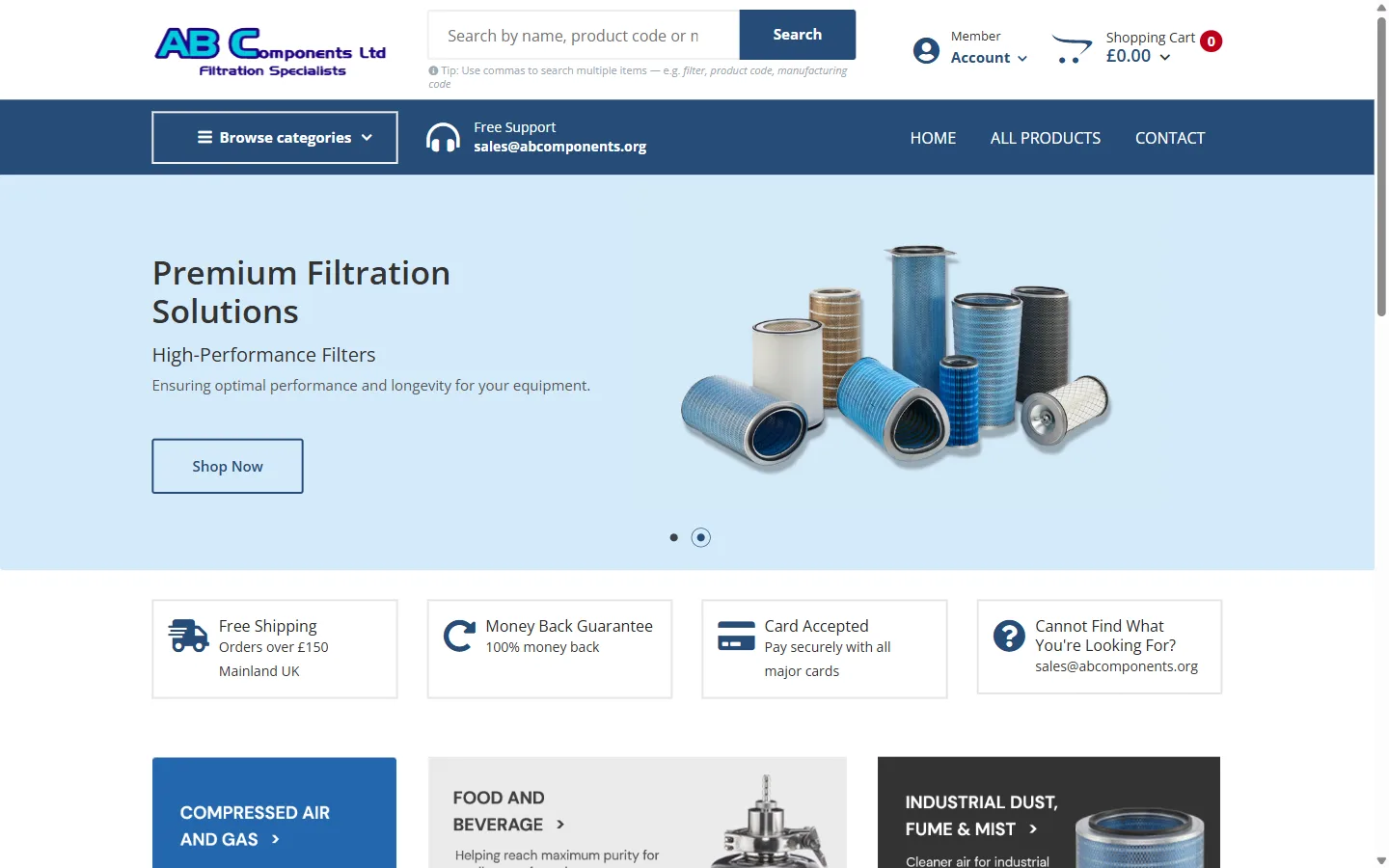
A trade supplier or wholesaler. Businesses on the industrial estates around Colwick and Netherfield often sell to the same buyers every month. They need trade accounts, repeat ordering and search by part number. Small trade catalogues can run on WooCommerce with accounts. Large ones usually need bespoke code. The closest example to Nottingham is the Donaldson Filters store we built for AB Components in Ilkeston, a few miles over the county line: a PHP platform holding more than 6,000 products, searchable by keyword, product code or manufacturing code.
A service you sell by the hour or the slot. Lessons, consultations and courses are ecommerce too, they just sell time rather than stock. Ready Steady Drive teaches learners across Nottingham and Derby. Its website lets a learner pick manual or automatic, choose a lesson, book a slot and pay, with a small bespoke booking system behind it that the school runs without technical help.
A consumer brand with a small, simple range. If you sell a handful of products nationally, don't need custom checkout rules and are happy to pay a monthly subscription for convenience, Shopify can be the sensible choice. We can build on Shopify, though most of the shops we've delivered so far are WooCommerce or bespoke, and we'll tell you plainly which fits. Budget for its plan fee and any paid apps every month, for as long as the shop trades: Shopify's entry plan is £19 a month paid annually, or £25 paid monthly (checked November 2026).
If everything you sell is made to order, you may not need a basket at all. An enquiry-led site can serve you better.
You'll also see Nottingham shops advertised for under £1,000; one local provider lists ecommerce builds from £797 (November 2026). A template shop at that price can be the right start for a small range. Before you compare it with a £3,000 quote, ask who loads the products, writes the descriptions and sets up delivery rules, because that's usually where the difference sits.
What actually drives the price
Two Nottingham shops with the same number of pages can cost very different amounts. These are the things that move a quote, roughly in order of how often they surprise people:
- 1The state of your product data. Is it in a tidy spreadsheet, a supplier feed, or someone's head? Getting products into the shop, with prices, descriptions and stock, is often the biggest hidden job. We quote for it and often do it ourselves.
- 2Variations. A T-shirt in five sizes and four colours is twenty items to price, stock and photograph, not one.
- 3Photography. Consistent product photos are the difference between a shop that looks established and one that looks thrown together. You can supply them, or we can shoot them through our product photography service.
- 4Copy. Manufacturer descriptions are on every other site selling the same item. For The Mani Club, a UK gel polish supplier, we wrote every page, which added to the cost but gave the shop its own words to rank with.
- 5Delivery rules. Free local delivery inside certain NG postcodes, a flat national courier rate, click and collect from the shop, or a mix. Each rule needs setting up and testing.
- 6Accounts and pricing tiers. Guest checkout is standard. Trade accounts, customer-specific prices and quick reorder add work.
- 7Integrations. Connecting to a till, accounting software or a courier's system. We've connected shops to QuickBooks for accounting. Each new connection is scoped before we quote.
As a rough guide to how those land in our published bands:
| Budget (ex VAT) | Typically covers | Example |
|---|---|---|
| From around £3,000 | WooCommerce shop, standard checkout, a manageable range, your photos and data | The Mani Club and Ready Steady Drive both came in between £2,000 and £4,000 |
| £3,000 to £6,000 | Accounts, variations, booking or multilingual; catalogue work and copy by us | |
| From £5,000 | Bespoke code, thousands of products, code-based search, custom admin | Donaldson Filters store: over £6,000, more than 6,000 products, about two months to build |
Your quote sets out the main things it covers, such as product count, payment methods, delivery rules and catalogue work. If something you need isn't on it, ask before you sign, and compare quotes on the same list.
How long it takes, and what slows it down
Once products, photos and copy are ready, a standard shop is usually built in about a week. The time goes on product data, not design. A shop with 60 products and good photos moves quickly; one with thousands of lines in a supplier spreadsheet takes longer to populate and check. The Donaldson Filters store, with more than 6,000 products, took about two months.
For a Nottingham retailer, timing usually matters around the busy season. If you want to trade online for Christmas, brief us at least three weeks before you want the shop live, and earlier if your product data isn't ready. Then leave the shop running for a few weeks before the rush so you can iron out delivery and stock questions. The same applies if your trade follows the university calendar: if students at the University of Nottingham or Nottingham Trent are a big part of your custom, launch before term starts, not during freshers' week.
What Nottingham shops often need that national guides skip
- Click and collect done properly. Clear collection times, an email when the order is ready, and your shop address matching your Google Business Profile.
- Local delivery by postcode. Many independents can deliver within a few miles cheaper and faster than a courier. Setting delivery charges by NG postcode area is straightforward if it's planned at the start.
- Being found locally as well as nationally. A shop with a physical counter can appear in map results and in Google's free product listings. That's search work rather than build work, and it's covered in our guide to ecommerce SEO for Nottingham retailers. The build still matters, because the shop's structure decides how easy that SEO is later.
- Ownership. Domain in your name, full admin access, and the design, code and product data assigned to you on final payment. If you ever leave, the shop and its customer data come with you.
Our ecommerce work, honestly described
We haven't yet published a case study for a Nottingham city-centre retail shop. Our closest ecommerce builds are Ready Steady Drive, which serves Nottingham learners, and the Donaldson Filters store just over the border in Ilkeston. Further afield, we built The Mani Club's international shop and several East Midlands stores you can see in our case studies.
Getting a quote you can compare
Before you contact anyone, ours included, write down:
- Roughly how many products you sell, and how many have sizes, colours or options
- Where your product data and photos live now
- How you want to deliver: courier, local delivery, collection, or a mix
- How customers should pay: card, PayPal, wallets, trade account
- The address of any existing shop, so rankings can be protected if it's replaced
- Which till or accounting system you use
Send that to two or three suppliers and you'll get quotes that can be compared like for like. Our ecommerce web design page explains how we build shops in more detail, or call 0115 647 0444 and we'll give you a straight answer on platform before we talk price. We're in Long Eaton, about eight miles from the city centre, and happy to visit your shop.
Frequently asked questions
How much does an ecommerce website cost in Nottingham?
With Vimana Digital, a standard WooCommerce shop starts from around £3,000; shops with accounts, variations, booking or multiple languages cost £3,000 to £6,000; bespoke or large-catalogue platforms start from £5,000. Prices exclude VAT. Published Nottingham agency ecommerce prices start at about £9,750 (Adtrak, October 2026).
Can a Nottingham shop offer click and collect on its website?
Yes. WooCommerce supports local pickup as a delivery option, so customers can pay online and collect from your shop. Plan the collection times, the "ready to collect" email and how online orders reach whoever is behind the counter before the build starts.
Should a small Nottingham retailer use Shopify or WooCommerce?
WooCommerce if you want to own the shop outright, control checkout and URLs, and avoid a monthly platform fee. Shopify if you have a small, simple range and prefer to pay a subscription for convenience. We can build on either, and on bespoke code, and will say plainly which suits you.
How long does it take to build an online shop?
A standard shop is usually built in about a week once products, photos and copy are ready; a catalogue of thousands of products can take around two months. Product data is the main variable: how many products, how many variations, and whether photos and descriptions are ready. If you're aiming for a seasonal launch, allow time for the shop to run before the busy period.
Do I need an agency in Nottingham itself?
Not necessarily, but meeting in person helps when a shop has a physical counter, stock and staff to train. We're based in Long Eaton, about eight miles from the city centre, and visit premises across Nottingham and Nottinghamshire.